Introduction to Henan University of Technology
Henan University of Technology, located in Zhengzhou, Henan Province, is a multidisciplinary institution with a primary focus on engineering. It encompasses nine major academic fields including engineering, science, economics, and management. The university traces its origins to 1956, founded upon the merger of its predecessors, the Central Grain Cadres School and the Zhengzhou Machine Manufacturing School.
The Central Grain Cadres School, established in Beijing, was the first grain-focused institution in New China. It relocated to Zhengzhou in 1960 and underwent successive transformations into Zhengzhou Grain College and Zhengzhou Engineering College, operating under several national ministries including the State Food Department, the Ministry of Commerce and the Ministry of Domestic Trade. Zhengzhou Machinery Manufacturing School was successively renamed Zhengzhou Mechanical College and Zhengzhou Industrial College, and was successively under the jurisdiction of the First Ministry of Machinery Industry, the Ministry of Machinery and Electronics, and the Ministry of Machinery.Both institutions were transferred to the administration of Henan Province in 1998. Their formal merger in 2004, with the approval of the Ministry of Education, established the present-day Henan University of Technology.
In 2010, it became a university jointly built by the People's Government of Henan Province and the State Administration of Grain (now the National Food and Strategic Reserves Administration). In 2012, it was selected into the "Basic Capacity Building Project for Higher Education Institutions in Central and Western China" by the Ministry of Education. In 2013, it was among the first batch of universities to be included in the "2011 Plan" as the second unit. In 2020, it was selected as a characteristic backbone university in Henan Province. In 2021, it was selected as a university for the "Double First-Class" initiative in Henan Province. In 2022, it was included in the "Priority Development Plan for University Disciplines" by the Ministry of Education.
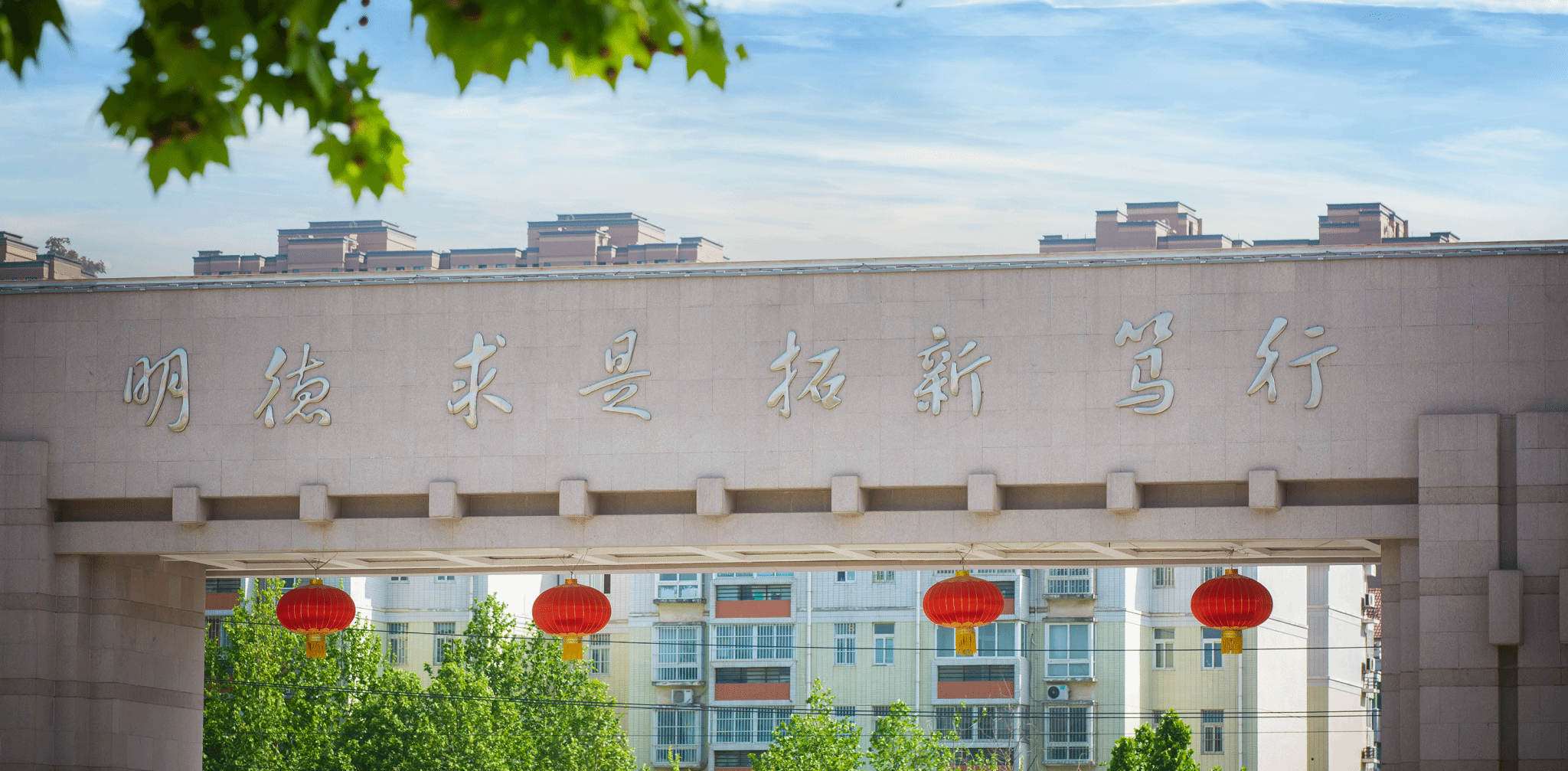
Since its founding, the university has adhered to the fundamental mission of fostering virtue and cultivating talent. It upholds the motto "Wisdom, Truth-seeking, Innovation, and Diligence" and an educational philosophy centered on serving the people, prioritizing quality, and developing distinctive strengths. Its strategic positioning is to be rooted in the Central Plains, serve industry, contribute nationally, and engage globally. The university promotes a spirit of scientific advocacy, exploration, dedication to country and education, and self-improvement. It has continuously solidified its leading characteristics and advantages in grain and food science as well as super-hard materials, earning the reputation as the "Whampoa Military Academy" of China's grain industry for producing over half of the sector's management and technical elites. To date, it has cultivated nearly 300,000 outstanding graduates.
I. Faculty
The university implements a "Talent-Strong University" strategy. It currently employs 2,115 full-time teachers, including 1,044 with senior professional titles and 1,302 holding doctoral degrees. The faculty includes 1,193 master's supervisors and 196 doctoral supervisors. It has attracted 361 high-level talents, such as academicians, Changjiang Scholars, recipients of the National Science Fund for Distinguished Young Scholars, national candidates for the "Thousand Talents Program", national teaching masters under the "Ten Thousand Talents Program", experts receiving special government allowances, New Century Excellent Talents from the Ministry of Education, and Central Plains Scholars. There are 30 provincial-level or higher teaching and research teams. There is a group of experts and professors holding positions in the International Food and New Materials Science and Technology Organization and the International Organization for Standardization. Has held the position of president or vice president in more than ten secondary academic organizations such as the China Cereals, Oils and Foodstuffs Association, the China Grain Industry Association, the China Grain Engineering Construction Committee, the China Grain Economics Society, the National Abrasives and Grinding Tools Standardization Technical Committee, the China Heat Treatment First-Class Society, and the Organic Chemistry and Phosphorus Chemistry Professional Committee of the Chinese Chemical Society. They are dedicated to teaching and nurturing students in their respective teaching positions and professional fields, and are truly exemplary.
II. Disciplines and Programs
The university has long been committed to fundamental theoretical and engineering research in post-harvest grain science, constructing a complete disciplinary system integrating storage, transportation, processing, nutrition, equipment, information, and management. It hosts the nation's most comprehensive grain and food discipline cluster and a robust super-hard materials discipline cluster. It is China's only university focused intently on building disciplines for post-harvest grain security.The university has established 3 postdoctoral research stations. It offers 5 first-level doctoral degree programs, 24 first-level master's degree programs, 19 master's professional degree categories, and hosts 32 Henan Provincial first-level key disciplines.Five disciplines—Agricultural Sciences, Engineering, Chemistry, Materials Science, and Biology & Biochemistry—rank within the top 1% globally according to Essential Science Indicators. Key developments include the selection of its "Postharvest Grain Safety and Processing" discipline cluster as one of Henan's first batch of superior and characteristic discipline construction projects in 2015. In 2020, Food Science and Engineering, Mechanical Engineering, and Civil Engineering were approved as provincial characteristic key construction disciplines. In 2022, the "Artificial Intelligence and Smart Grain" discipline cluster was listed for cultivation as a provincial urgently-needed characteristic key discipline group. Notably, the "Food Science and Engineering" discipline, a cornerstone of Henan's "Double First-Class" initiative, achieved excellent results in the latest national discipline assessment and was selected as a priority development discipline by the Ministry of Education.
The university comprises 23 schools offering 74 undergraduate programs. Among these, 24 are designated as National First-Class Undergraduate Program construction points and 23 as Provincial First-Class Undergraduate Program construction points. Eighteen programs have passed national engineering education accreditation. It boasts 5 national-level characteristic programs, 3 national-level comprehensive reform pilot programs, 3 national-level excellence initiative programs, and 16 provincial-level brand and characteristic programs.
III. Talent Cultivation
The university enrolls students nationwide and holds designations such as a national institution for postgraduate recommendation, the authority for independent recruitment of international students, and recognition as an exemplary unit in undergraduate teaching evaluation. Current enrollment exceeds 33,500 full-time undergraduate students and 4,000 postgraduate students.It houses several national-level platforms including the "National Experimental Teaching Demonstration Center for Food Science" and the "National Innovation Experimental Zone for Engineering Application-Oriented Talent Training in Grains and Oils". It also maintains the "HAUT-Henan Zhonghe Chunjing Flour Industry Co., Ltd. Engineering Practice Education Center" as a national off-campus practical education base.
The university places great emphasis on student competitions, consistently leading in Henan Province. It won Henan's first national "Challenge Cup" trophy. Over the past five years, students have garnered more than 4,000 national and provincial-level awards. In 2024, the university led the province in the number of national "Challenge Cup" awards. It has also received 2 national awards for university art performances. More than 90 student projects have been approved as national key or special social practice projects, and over 30 teams have been designated as national volunteer service demonstration teams. The university has consistently ranked first in Henan for the number of students enrolled in the "College Student Volunteer Service West Program", earning repeated honors such as "National Excellent Project Office" and "National Outstanding Social Practice Unit".
The university has been twice recognized by the Ministry of Education as a "National Advanced Collective for Graduate Employment Work" and has received numerous honors including "National Top 50 Universities for Employment", "National Advanced Collective for Mental Health Education", and "National Characteristic School for National Defense Education". The quality of its talent cultivation enjoys high societal recognition.
IV. Scientific Research
The university maintains high-level research teams focused on addressing national and provincial strategic needs, actively serving national strategies and regional economic development.In post-harvest grain science, it has built an integrated research system covering storage, transportation, processing, equipment, nutrition, information, economy, and management. In new materials, research focuses on high-quality diamond, high thermal conductivity functional diamond composites, and high-speed, high-efficiency, high-precision super-hard material tools, tackling key preparation technologies. Research on carbon fibers, basalt fibers, and related high-performance composites addresses critical scientific issues and core technologies in preparation and application, contributing to overcoming bottlenecks in strategic materials. In intelligent manufacturing, efforts target key technologies in information sensing, humanoid robots, and embodied intelligence to enable autonomous perception and decision-making control. In economics and logistics management, the university developed the first vertical large model in the grain sector, focusing on grain condition risk warning and supply chain optimization for dynamic market decision-making. These efforts have yielded significant research outcomes that effectively promote industrial progress and social development.
The university leads or co-leads 1 national engineering research center, 1 national engineering research center partnership, and 1 Ministry of Education key laboratory. It hosts a total of 65 national and provincial scientific innovation platforms, 50 provincial platforms, 75 university-level academic research institutes, and over 100 teaching, research, internship, and training platforms. It has strengthened international cooperation, establishing the Henan Province Technology Transfer Demonstration Institution and the University Intellectual Property Operation Management Center. In collaboration with local governments and leading enterprises, it has jointly established 6 local/industrial technology research institutes, with 2 approved as provincial key university-enterprise R&D platforms.
The university's research achievements are notable. It received 5 national awards at the 1978 National Science Conference and the 1986 National Key Science and Technology Project Reward Conference. Recent projects like "New Technologies for Efficient and Energy-Saving Wheat Processing" and "Key Technologies and Industrialization of Soybean Phospholipid Production" have collectively won 14 National Science and Technology Progress Awards, 3 National Teaching Achievement Awards, 1 China Standard Innovation Contribution First Prize, and 4 Henan Province Science and Technology Progress First Prizes. It has undertaken 620 national-level research projects. The university has presided over the formulation and revision of over 300 international, national, and industrial standards, establishing the first national grain standard research and verification center. The standards it developed in grain storage account for 68% of the field's total in China, leading the construction of China's grain storage standard system. It has compiled over 300 planning and decision-making consultation reports, with 34 adopted by provincial and ministerial departments. In 2017, it ranked among the top 100 Chinese universities for technological innovation competitiveness.
V. International Exchange and Cooperation
Adhering to an open education strategy, the university has established friendly cooperative relations with over 70 internationally renowned universities and research institutions.
It emphasizes international development for faculty and students through programs like the Young Backbone Teacher Overseas Program and partnerships with the China Scholarship Council. Currently, 5 overseas academicians, over 60 international faculty, and 23 foreign postdoctoral researchers are engaged in teaching and research. Collaboration exists with top institutions such as the University of Cambridge, University of Reading, Politecnico di Torino, and University of Manitoba, offering various student exchange, joint training, and research programs with full support for international study.
The university holds significant international influence in grain science, participating in formulating international standards and serving as a representative for the International Association for Cereal Science and Technology. It maintains extensive exchanges with organizations like the International Grain Council, the UN Food and Agriculture Organization, and the French Institute for Cereals. It co-established the "China-US Soybean Product Value Chain Innovation Center" with the American Soybean Association. The university has formed 31 international academic teams, established 6 provincial international joint laboratories, and secured 8 provincial foreign expert platform projects.
It actively promotes cooperation with Belt and Road partner countries, signing a strategic agreement with the UN World Food Programme and co-hosting the World Food Loss Reduction Conference. Since 2008, it has been the only institution in Henan implementing national overseas training projects, having trained over 3,000 senior grain officials and technical experts from 121 countries through its Henan Province Overseas Training Center, contributing significantly to global food security.
International educational cooperation began in 2003, now featuring six undergraduate joint programs. In 2024, its Food Science and Engineering joint program was rated a high-quality cooperative program in Henan. The university prioritizes international student education, offering a complete system for bachelor's, master's, and doctoral studies, and is qualified to host students under the Chinese Government Scholarship, Silk Road Scholarship, and Henan Provincial Government Scholarship.
VI. Campus and Facilities
The university operates three campuses: Lianhua Street, Songshan Road, and Zhongyuan Road, covering a total area of 2,365 acres with a construction area exceeding 1.1 million square meters. It is a participant in Henan's "Digital Campus Demonstration Project" and a pilot unit for "Smart Campus" and "Network Learning Space" construction.
Facilities include 1 national experimental teaching demonstration center, 8 provincial demonstration centers, and 5 provincial virtual simulation experimental teaching demonstration centers. It hosts the pre-exhibition hall of the China Grain Museum and serves as the Zhengzhou Training Base for the National Grain Industry and a National Continuing Education Base for Professionals. Laboratory space exceeds 160,000 square meters. The total value of teaching and research instruments reaches 955 million RMB, including 226 pieces of equipment each valued over 500,000 RMB.The university library holds a rich collection of over 4.28 million physical and electronic books and provides access to 50 foreign language databases. Its published journals include Agricultural and Food Science, indexed in ESCI and EI,Journal of Henan University of Technology, indexed in Scopus and recognized as a Chinese core journal,Journal of Henan University of Technology, an A-level extended journal and a national outstanding social science journal,and Interdisciplinary Sciences: Computational Life Sciences, an SCI-indexed journal included in over 20 international databases. The university archives are certified as a special-grade standardized repository in Henan.These advanced and comprehensive teaching, research, and cultural facilities, set within an elegant campus environment, provide a solid foundation for teaching, research, management, and service.